Village Hall or Pop-Up Screen: Two Different Film-Night Formats
Village hall or pop-up screen? Compare how each setting shapes seating, sound and atmosphere, then choose a format that suits your film and audience.
The common mistake with a village hall or pop-up screen is treating the venue as a neutral shell for the film. That can leave a regular hall feeling like a borrowed room, or a temporary screening feeling like an event assembled around equipment rather than people. The setting changes where an audience looks, how it settles, and what makes the evening feel distinct.
What does the venue change before the film starts?
A village hall is a familiar room with established habits. People may know where to leave coats, how to find the toilets and which seats are easiest to reach. That familiarity helps an audience arrive without ceremony, but it can also make a screening feel like another booking on the hall calendar.
A pop-up screen makes the change of setting part of the invitation. A barn, marquee, courtyard or cleared community space asks people to notice the venue anew. The unusual location can create anticipation before the first frame, though it also asks organisers to make arrival, shelter and audience flow clear.
Neither format is inherently more intimate or more exciting. The useful question is what the room already communicates, and whether that message helps the film night.
How does the layout shape the audience?
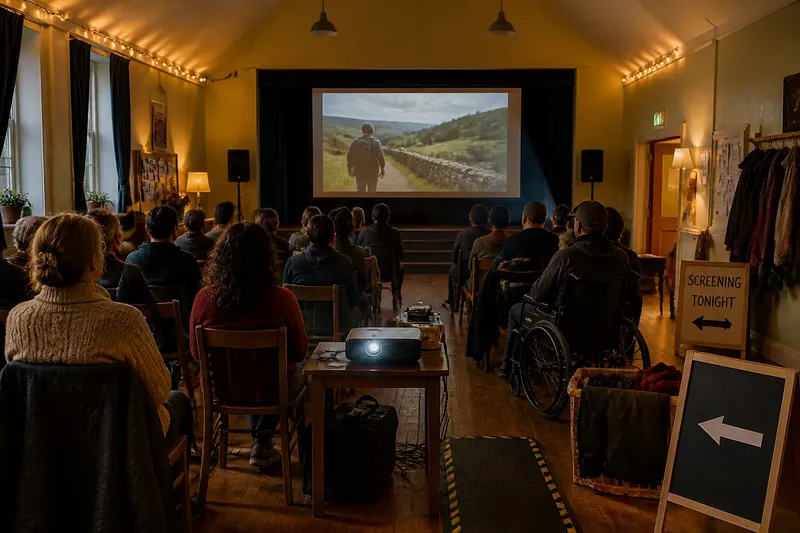
In a village hall, the room often has a familiar orientation: a stage or front wall, rows of chairs, and entrances along the sides or rear. That arrangement is straightforward, but rows can make a small audience feel more formal than intended. Leaving a central aisle and keeping seats clear of doors helps people move without crossing the beam or blocking anyone’s view.
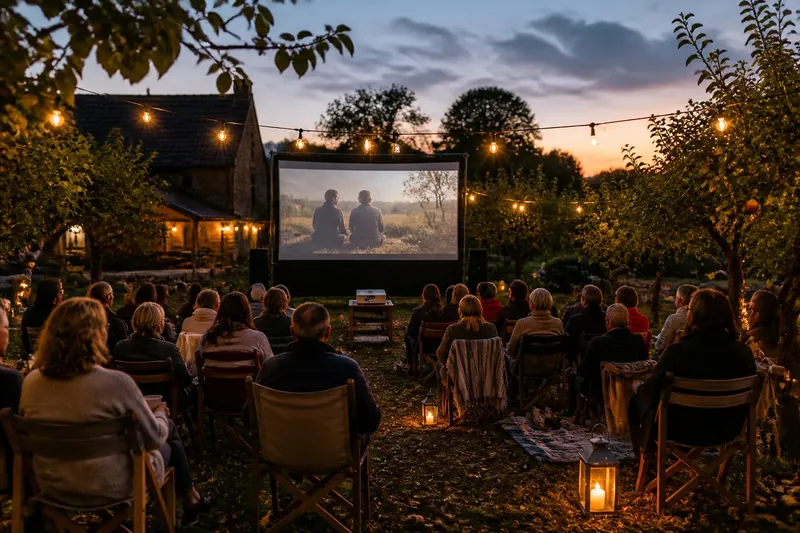
A pop-up layout may need to respond to the site rather than a standard front wall. In a courtyard, the screen might sit against a blank wall; in a marquee, poles and guy ropes can dictate where seats fit. Mark the audience area with chairs, rugs or a simple boundary, and keep access routes visible. The screen should be easy to see from the back and from seats at the edges, not merely from the centre.
Think about how people will enter and leave, including anyone who uses a mobility aid or needs a seat near an exit. The room’s actual access arrangements matter more than an attractive diagram made before visiting it.
Which format suits the mood you want?
A hall tends to support a focused, settled mood. Familiar surroundings, dependable seating and a clear front can make it easier for an audience to concentrate on a quiet or dialogue-heavy film. The room can also feel social before and after the screening: neighbours greet one another, take a seat, and resume conversation once the lights come up.
A pop-up can make the same film feel like a special occasion simply because the audience has gathered somewhere unexpected. Evening light fading outside, an open-air setting or a temporary room within a familiar building can give the screening a sense of departure from routine. That atmosphere depends on the site being comfortable enough for people to watch rather than spend the film distracted by weather, glare or noise.
Say you are choosing between a familiar hall and a sheltered orchard space for a gentle, conversation-led film. If the orchard has a clear screen position, comfortable seating and a plan for changing weather, it could make the gathering feel distinctive; if those conditions are uncertain, the hall may better serve the film’s quieter tone. The choice follows the audience’s experience, not the novelty of the location.
What practical details make each setting work?
For a hall screening, check the room in its actual screening configuration. A stage may seem like the obvious screen position, but a low screen can disappear behind the heads of people in the back rows. Look for a plain, darkened wall, and consider whether windows, emergency lighting or reflective surfaces will distract from the image.
For a pop-up, inspect the site at the time of day the event will take place. Daylight can wash out a picture, while nearby roads, kitchens or outdoor activity can compete with the soundtrack. Consider where the projector and audience can sit without obstructing an entrance or creating a trip hazard. For equipment, venue use and local safety arrangements, follow the manufacturer’s instructions and the site’s rules.
- View: Check sightlines from the sides and rear, then adjust the screen or seating if heads or fittings obscure it.
- Light: Notice windows, lamps and changing outdoor light; choose a darker position or a later start where practical.
- Sound: Listen for nearby activity and echo; reposition speakers or seating within the venue’s permitted arrangement.
- Movement: Keep entrances and routes to seats clear, and avoid placing cables where people will walk.
- Comfort: Decide whether the available chairs, floor coverings and shelter suit the expected conditions; tell guests what to bring if needed.
- Arrival: Make the entrance and screening area easy to identify, particularly when the venue is not usually open for film.
How should you introduce a less familiar venue?
A regular hall needs a small cue that tells guests the room has changed purpose. A clear welcome at the door, a simple sign pointing to the screen, or a short introduction can establish that this is a shared film event, not just a room with chairs facing one way. Keep the route to seating obvious so the opening does not become an exercise in finding the right entrance.
A pop-up needs more orientation because guests may not know what to expect from the site. Explain where to enter, where to sit and what to do if the weather shifts. A volunteer at the arrival point can answer practical questions and keep late arrivals from wandering through the audience. These details make the unusual location feel hosted rather than improvised.
In either setting, avoid over-programming the room. A brief welcome and a clear invitation to settle are usually enough; the film should remain the centre of attention.
Which format fits your film night?
Is a village hall better for a quiet film?
A hall can be a strong choice when clear dialogue and steady viewing conditions matter. Check for echo and sightline problems rather than assuming the familiar room is automatically ready.
Does a pop-up need an unusual location?
No. A temporary screening can take place in a familiar community space if the room is rearranged for the occasion. The change in layout and welcome can make the event feel different without relying on a dramatic setting.
How can you make a hall screening feel like an occasion?
Give the room a deliberate screening layout, make the welcome visible, and leave space for people to gather before and after the film. A few considered choices can distinguish the event from the hall’s everyday uses.
What should decide between the two formats?
Start with the conditions the audience needs: a clear view, comfortable seating, suitable sound and an easy arrival. Then decide whether familiarity or a temporary sense of discovery better suits the film and gathering.
Let the setting support the screening
Village hall or pop-up screen is not a contest between ordinary and adventurous. A hall offers a known place that can be shaped for attention; a pop-up makes the act of gathering somewhere temporary part of the evening’s character. Compare how people will enter, sit, see and listen before choosing. When the venue supports those simple acts, its atmosphere can add meaning without competing with the film.