The Local Film Does Not Have to Be a Postcard
Make a local film feel rooted in place without scenic clichés: build a familiar genre around ordinary rooms, varied characters and recognisable details.
The most common mistake in local film-making is opening on a sweeping view because the countryside seems to demand one. That choice can cost the story its most distinctive material: the rooms, routines and disagreements that make a place feel lived in. A local film can use a thriller, comedy, romance or family drama and still belong unmistakably to its setting.
Start with a question that could only arise among people who know this place, then build towards it with familiar dramatic tools. Fields and hills may appear, but they need not carry the whole burden of identity. A bus timetable on a kitchen wall, a noticeboard outside the shop or the way neighbours negotiate a shared lane can do more storytelling than a postcard view.
What makes a story belong to a place?
Place becomes vivid through what it asks characters to do. A distant workplace shapes someone’s daily rhythm; a community room gives people somewhere to meet but little privacy; a local rumour travels faster than anyone can control. These details affect choices, so the setting is part of the plot rather than a scenic backdrop.
Make a short list of pressures your characters would recognise. Think about distance, weather, work, seasonal routines, family ties, local services or the difficulty of keeping a private matter private. Choose one or two that genuinely affect the story. A catalogue of local references can feel like a visitor’s guide; a detail that changes what someone does feels dramatic.
Then ask who sees the place differently. A newcomer may find a quiet road isolating; a teenager may see it as the only route between friends’ homes; someone who has lived there for years may know precisely where a conversation can be overheard. Contrasting points of view make a setting complex without requiring a speech about rural life.
How can genre give local details a job?
Choose a genre for the kind of pressure you want to put on the characters. A mystery makes access, memory and trust matter. A comedy can grow from competing obligations or a poorly timed interruption. A romance may turn on the question of whether two people can build a shared routine in a place where everyone already knows their histories.
Genre gives the audience a clear promise, while local details make that promise specific. In a thriller, a familiar lane could become a place where someone expects a private conversation. In a family drama, the same lane might expose an old disagreement about who is meant to collect a relative. The location earns its place because the characters use it differently.
Say you want to make a small-town mystery. Imagine a volunteer sorting lost property in a community room discovers that a familiar set of keys has been returned repeatedly, though nobody admits to leaving it. The action is ordinary, the clue belongs to a shared space, and the audience can watch trust shift as different neighbours give their accounts. The mystery does not need a dramatic landscape; its tension comes from who has access and what each person is willing to say.
Keep the genre’s basic engine intact. A mystery still needs a question and a changing set of possibilities; a comedy needs friction and an escalation; a romance needs people whose desires affect each other. If local references replace that engine, viewers who do not know the area may feel shut out, while residents may find the story thin.
Which ordinary interiors can carry a scene?
Begin with rooms where people already have a reason to gather or work. A kitchen can hold hospitality, interruption and family tension. A workshop can show expertise, dependence or a dispute over how something should be done. A waiting room gives strangers a reason to share silence. A club room can make a public disagreement feel intimate.
Do not choose a location solely because it looks quaint. Ask what can happen there that would be harder elsewhere. Note who controls the room, what the characters are doing with their hands, where they can sit, and what might interrupt them. A kettle, a damp coat or a stack of forms can give actors useful business, but only if those objects belong naturally in the scene.
Consider sound before committing. A room beside a busy road may bring passing traffic into dialogue; a large hall may make quiet speech feel exposed; a working space may have rhythms that characters must wait around. These conditions can enrich the scene, but they may also make recording difficult. Visit with a small recorder or your phone, listen at the time you expect to film, and decide whether the sound serves the scene or will fight it.
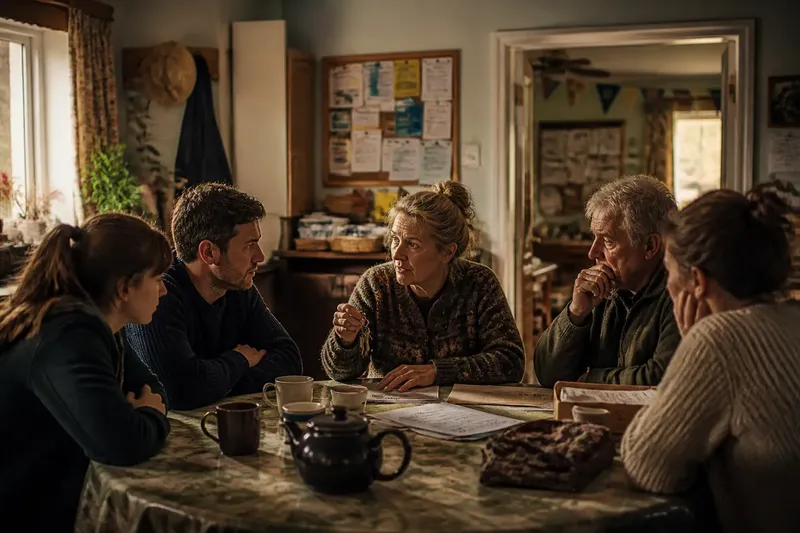
When a real venue is unavailable, adapt the action to a room you can access. A kitchen table can suggest a committee meeting if the scene turns on the papers, roles and decisions rather than the institution’s appearance. Change identifying details where needed, and do not imply that a real business or group behaved badly without their agreement.
How do you make the characters feel varied and specific?
Give each person a want that is not simply to represent a kind of rural resident. One may want to protect a neighbour; another may want to leave without being treated as disloyal; someone else may want a practical problem solved before it becomes a public argument. Their wishes can overlap, clash or change during the story.
Variety comes from differences in age, work, family situation, temperament, access and ambition, not just from assigning characters different accents. A person who knows everyone may still feel lonely. Someone who has recently arrived may have good reasons for staying. A young character can be deeply attached to local routines, while an older one may be eager to change them.
Write a brief private note for each character: what they want in the scene, what they are reluctant to admit, and what practical knowledge they bring. Then check whether the story gives each person a choice that affects events. If a character exists only to explain local customs or provide a colourful reaction, give them a stake of their own or reconsider whether the scene needs them.
What should you check before writing the dialogue?
How much local knowledge should a scene assume?
Let characters speak as if they know their own surroundings, but make the relevant stakes legible through action. A glance at a notice or a correction between neighbours can orient viewers without turning dialogue into an explanation.
How can local speech sound natural on screen?
Listen to how people around you shape a conversation, then write for clarity and character rather than copying every verbal habit. Give performers room to make the lines their own, and avoid treating an accent as a shortcut for humour or authenticity.
Should a local film include a familiar landmark?
Include one when it affects a character’s route, memory or decision, not merely to prove where the film was made. A recognisable feature can be useful, but a less famous room or routine may carry more emotional meaning.
How can you tell if a scene feels like a postcard?
Ask whether the location could be removed without changing what anyone does. If the answer is yes, add a practical or emotional connection between the setting and the choice at the centre of the scene.
How can you turn the idea into a shootable short?
Build the scene around what you can responsibly access, then shape the story to fit. For a short film, a few locations with distinct purposes can be stronger than a long procession of scenic stops. A kitchen, a shop doorway and a shared room might each reveal a different kind of relationship, provided every location changes the action.
- Write the central conflict in one plain sentence, without naming a landscape.
- Choose a genre and identify the question or pressure that will keep the story moving.
- Pick locations where the characters have a believable reason to be.
- Give every speaking character a personal want and a decision that affects the scene.
- Read the dialogue aloud and remove lines that explain what the action already makes clear.
- Check access, permission, sound and the comfort of everyone involved before planning the shoot.
- Review each exterior shot: keep it if it reveals a route, obstacle, mood or choice.
Keep a simple location note for each scene: what happens there, what sound you expect and what permission you need. For a real venue or private property, agree access with the person responsible before filming; follow any relevant local rules and the location’s instructions. Avoid showing private names, messages or identifying details unless you have permission to include them.
On the day, let practical limitations guide small creative choices without letting them hollow out the story. If a room is noisier than expected, move a quiet exchange to a calmer corner or rewrite it as a conversation that tolerates interruption. If a planned exterior no longer works, ask what the scene needs from that view and find another way to make the same pressure visible.
How do you keep the local film grounded?
Show the place through repeated, ordinary use. A character may know which door sticks, who will answer a call during work, or how long a favour is likely to take. Such knowledge feels rooted because it belongs to the characters’ lives, not because it supplies a guide to the area.
Let disagreement remain part of the picture. Residents need not share one view of change, tradition or belonging. A story becomes more convincing when people can love a place and be frustrated by it at the same time. That tension also gives the plot somewhere to go.
When you review a draft, look for the details that alter behaviour and keep those. Remove scenery or local references that only ask the audience to admire the setting. The result can still include a striking view, but it will not depend on one: a local film feels rooted when its characters could not make the same choices in quite the same way anywhere else.