A Film Night for a Mixed-Age Audience
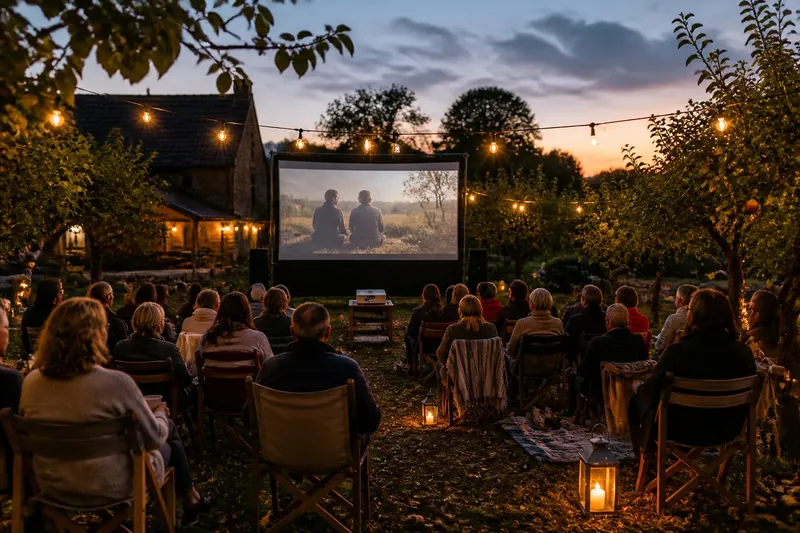
A film night for a mixed-age audience can welcome children and adults, keep the screening manageable and leave room for unhurried conversation afterwards.
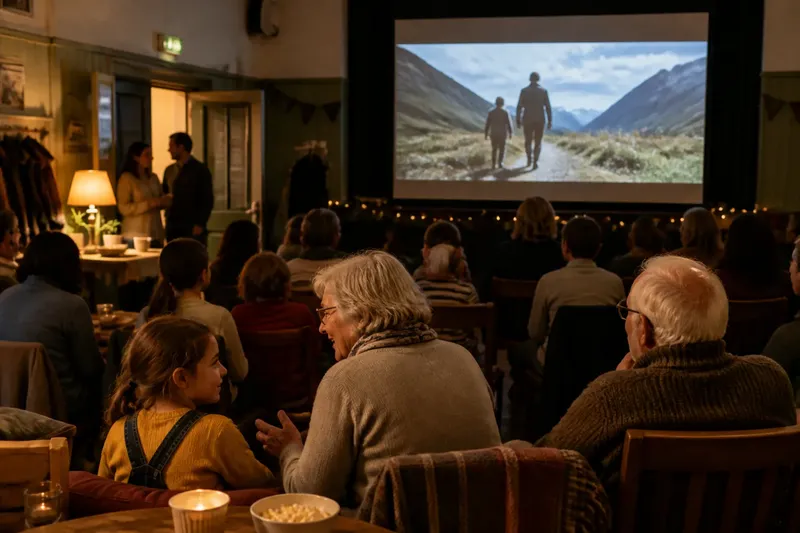
The common mistake with a film night for a mixed-age audience is choosing a film first and working out the evening around it later. That can leave younger guests restless, older guests unsure what to expect and the people hosting with no time to talk once the credits end. Start instead with the shape of the gathering: who is coming, how long they can comfortably stay and what sort of welcome will help them settle.
Who needs to feel welcome?
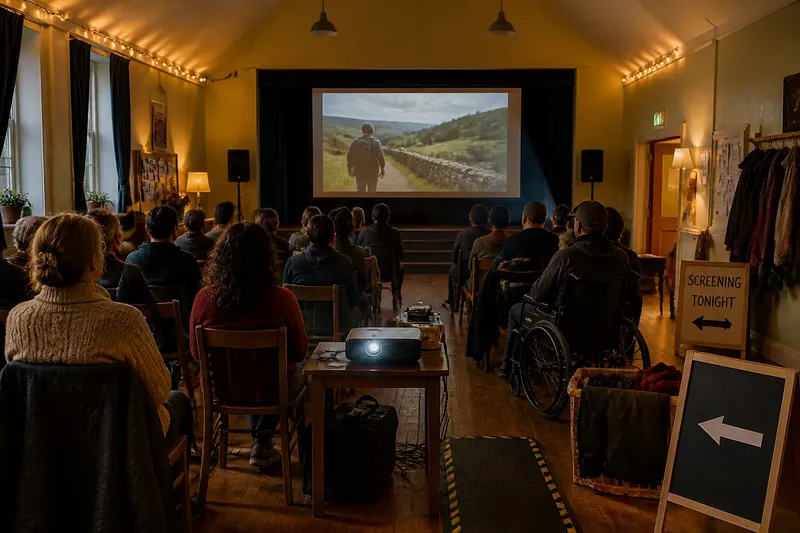
Imagine a village reading group and the families who use its community room decide to share a screening. Their invented situation begins with a practical mix: school-age children, parents, grandparents and a few neighbours who do not know one another well. The room is familiar to some and new to others. The hosts want a film everyone can follow, but they also want the evening to feel like a gathering rather than a children’s event with adults waiting at the edges.
Before choosing a title, one host asks the group what would help them feel at ease. The answers are specific: a clear welcome at the door, a chance to choose a seat without being hurried, and no assumption that everyone knows how a community screening works. They decide that one person will greet arrivals, while another can answer practical questions about the room and the film.
That division matters more than a polished speech. A friendly greeting can explain where to hang coats, where the toilets are and whether people may step out and come back in. A simple printed note by the entrance can cover the same points for anyone who arrives while the greeter is busy. Avoid treating children as a separate audience to be managed; include them in the welcome and speak to them directly as well as to accompanying adults.
How should the film fit the evening?
The group now discusses what sort of story might hold a varied audience’s attention. They consider tone, subject and pace alongside formal suitability. A film can be accessible without being childish, and a familiar setting or clear plot can give people of different ages something to follow. The hosts check the film’s age guidance and content notes, then share those details with the group before making a final choice.
They also consider whether the film offers more than one way in. Younger viewers may respond to visual humour or a lively character; adults may notice the relationships, setting or questions the story raises. That does not mean every selection needs a lesson or a discussion prompt. It means avoiding a choice that assumes one age group will simply tolerate the other’s preferences.
For this invented gathering, the hosts settle on a gentle adventure with a clear story and no difficult content they have not already discussed with families. They tell guests the title, the general tone and the reason it suits the group. If someone would rather not watch, the invitation remains open to join the conversation or simply come for the shared part of the evening.
What running time can the group manage?
Running time is not just the number printed on a film listing. The evening also includes arrivals, a short welcome, any interval and the time people need to leave without rushing. The hosts sketch a simple schedule on paper and work backwards from the time families and other guests are likely to head home. They choose a film that leaves breathing space rather than filling the entire booking.
In their plan, doors open early enough for greetings and settling in. The welcome is brief, the screening begins at the announced time, and an optional pause gives people a chance to stretch or use the facilities. The hosts make clear that nobody has to stay for every part. That small point helps guests with younger children decide whether the whole evening suits them.
They also make a modest adjustment to the room. A few seats near the aisle make quiet exits easier, while families can sit together without being directed to a special section. The hosts keep the path to the door clear and ask people to silence phones before the film starts. These are ordinary courtesies, not a demand for perfect stillness: a mixed-age audience may need to move, and a welcoming evening can accommodate that without making anyone feel watched.
How can the welcome set the tone?
On the evening, the greeter meets people at the entrance rather than waiting until they are seated. The welcome is warm and short: guests are told where to put coats, where to find refreshments and that stepping out quietly is fine. The host introduces the film without explaining every theme or asking the room to behave like a formal cinema audience.
The other host keeps an eye on practical details and is available for questions. They do not have to announce every facility from the front of the room. A small sign can direct people to the toilets, water and waste bins, while a spoken reminder covers anything guests need to know before the screening. If refreshments are offered, the hosts choose items that are easy to serve and clear away, and make the arrangement obvious rather than assuming everyone knows where to go.
Say the family of a younger child arrives just as the short welcome begins. The greeter quietly points them towards seats near the aisle and lets them know they can step out if needed. The expected result is observable and modest: the family can settle without interrupting the introduction, and the child has a straightforward way to leave the room if the film becomes tiring. No special announcement singles them out.
What helps conversation continue after the credits?
The hosts resist the temptation to switch on the lights and immediately ask everyone to discuss the film. Instead, they allow a little time for people to stretch, collect coats or refill a drink. A few chairs remain in a loose circle at the side of the room for anyone who wants to stay and talk. Guests who need to leave can do so without crossing through a formal discussion.
One host offers an open invitation: anyone who would like to share a favourite moment, a question or a detail they noticed is welcome. This gives children a way into the conversation without putting them on the spot. The adults can contribute too, but the hosts avoid turning the exchange into a quiz where there is a right interpretation.
In the invented scenario, a child mentions a funny scene while an older neighbour points out a small detail in the setting. Their comments lead to a relaxed exchange about what different viewers noticed. The point is not to draw a lesson from the film; it is to give people a reason to speak to one another after sharing the same screen.
Keep the ending unhurried but bounded. The hosts can say that the room will be available for a while, then offer a gentle reminder when it is time to tidy. A clear departure cue is kinder than letting some guests wonder whether they are expected to stay. Before people leave, the hosts thank them and mention how they can hear about another gathering, without turning the goodbye into a pitch.
How do you handle the questions guests are likely to ask?
How do I choose a film for different ages?
Look for a story whose tone and plot can hold more than one age group, then check age guidance and content notes before inviting people. Share the choice in advance so families and individuals can decide whether it suits them.
Should children sit together?
Let families choose seats that work for them rather than assigning a children’s area. A few places near an aisle can make it easier for anyone to step out quietly.
How long should the welcome be?
Keep it short enough that guests can settle quickly, while covering the useful details: facilities, refreshments, the film’s general tone and whether leaving and returning is acceptable. Put routine directions on a sign so the spoken welcome stays natural.
Do you need a formal discussion after the film?
No. Offer a relaxed chance to talk, and make clear that staying is optional. An open question or invitation to mention a moment can start conversation without making anyone perform.
What should the hosts learn from the evening?
After the gathering, the hosts make a brief note while the details are fresh. They record what guests asked at the door, whether the schedule left enough time to talk and which parts of the welcome seemed unclear. They do not treat one evening as a verdict on every future audience; they use the notes to make the next invitation more considerate.
For a film night for a mixed-age audience, the useful planning order is people, pace, welcome and conversation. In this invented case, that order let the hosts choose a suitable story without asking any group to accommodate the evening alone. For your own gathering, ask one practical question before you book: what would help a guest who arrives unsure, leaves early or has never joined a community screening feel that they still belong?